
Due to its unique geographical characteristics, the haor region of Bangladesh remains submerged for nearly six months of the year. During this prolonged period of inundation, many people in the region face limited livelihood opportunities and remain largely dependent on seasonal income sources.
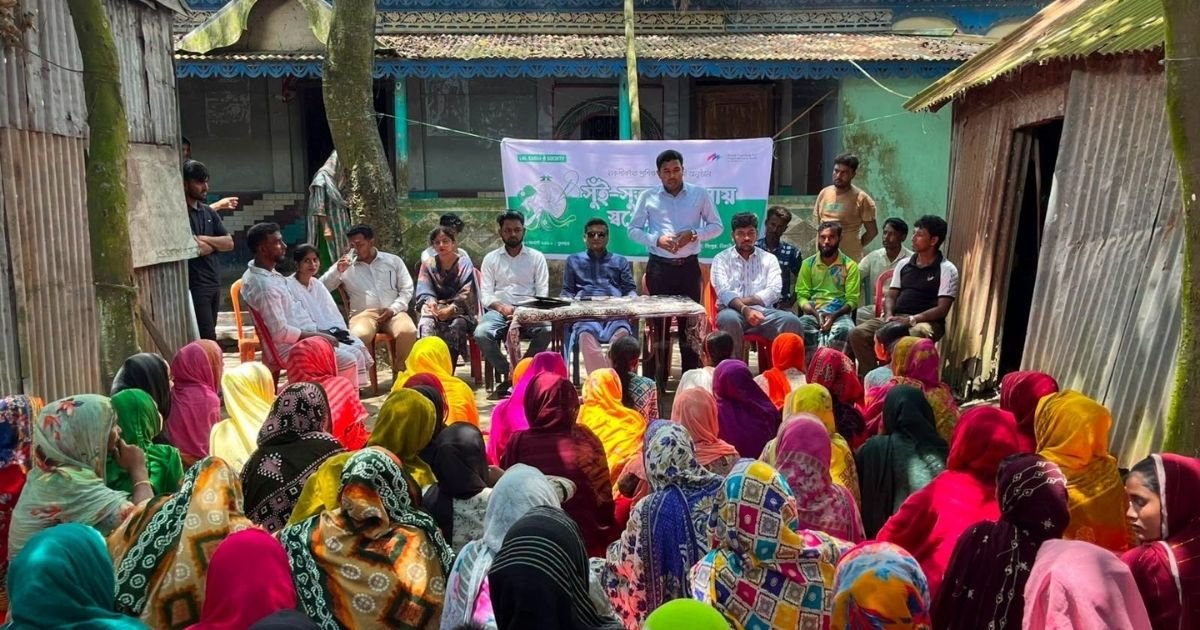
To help ensure that the livelihoods of haor communities do not come to a standstill during the annual floods, Lal Sabuj Society, with the support of Mutual Trust Bank, has launched an initiative titled “Resilient Horizons”.
The initiative will work with 150 flood-prone families in Nikli, Kishoreganj, creating opportunities for alternative and sustainable income generation. The programme will introduce activities such as vertical gardening and vermicompost production, alongside traditional handicrafts including Shital Pati and Nakshi Kantha. These activities will help families make better use of their available skills and resources while exploring income opportunities that can be adapted to the local environment.
Women’s participation and leadership will receive particular emphasis throughout the initiative. By engaging women in skills development and income-generating activities, the programme aims to strengthen their economic participation and support greater household-level resilience.
Alongside livelihood activities, the initiative will also focus on building the capacity of 20 local young people. They will receive training in climate-focused digital storytelling, digital marketing, and developing market linkages for locally produced goods. These skills are expected to help young people promote local products, share community stories, and connect producers with wider markets.
Through “Resilient Horizons”, Lal Sabuj Society and Mutual Trust Bank aim to strengthen the resilience of haor communities by turning local skills, resources, and creativity into sustainable livelihood opportunities.
The initiative envisions a future where seasonal flooding does not bring livelihoods to a halt, but where communities are better prepared to adapt, innovate, and build more stable and sustainable futures.